

How do you recognise a gold-plated hallmark? What are the rules in France?
The gold-plated hallmark is affixed to gold-plated jewelry and metal objects that meet French standards. This marking indicates the gold content of the object as well as the manufacturer or importer.
Responsibility hallmarks or master hallmarks:
There are 5 master hallmarks in France, including the hallmark for gold plating.
The gold plating hallmark is square in shape for "plated" items (affixing a film of precious metal by electrochemistry) and must be manufactured in France or imported from a European Union Member State. These hallmarks must be imposed: they engage the responsibility of the manufacturer or importer.


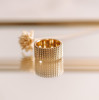
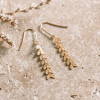
At Nerina Bijoux, all our gold-plated jewelry features the square gold-plated hallmark to prove authenticity. Our gold-plated jewellery is made from high-quality recycled metals to respect the environment and avoid child labour in the mines. We use 750/1000th (18-carat) gold with a layer of 3 to 5 microns for superior jewelry quality. Our jewelry lasts a minimum of 10 years under optimum conditions of use.
The gold-plated hallmark is regulated by France's Direction Générale de la Concurrence, de la Consommation et de la Répression des Fraudes (DGCCRF), which ensures that standards are respected. Jewelers and manufacturers who use the gold-plated hallmark must ensure that their products meet the standards before placing them on the market.
If you do not see a hallmark on your jewelry, it does not contain any precious metals (gold or silver).
In short, the gold-plated hallmark is a regulatory marking in France that indicates the gold content of an object covered with a layer of high-quality gold. This marking consists of a crowned eagle's head and must be accompanied by the manufacturer or importer's hallmark.
Looking for 18-carat gold-plated jewelry?
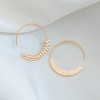
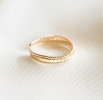
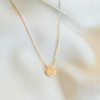
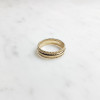
Discover our high-quality gold-plated ladies' jewelry, all with the legal gold-plating hallmark:
- Gold-plated bracelets and necklaces
What are the other hallmarks for gold in jewelry?
Title or guarantee hallmark:
In order to verify a jewel's title, the customs services or approved laboratories carry out a chemical test on the jewel in question. If the title is confirmed, the title hallmark is affixed to the jewelry.
Since 20 November 2014, jewelry weighing less than 3g for gold and less than 30g for silver has been exempt from having the title hallmark affixed. However, manufacturers or importers must still affix their master hallmark to incur liability. Items exempt from the hallmark remain under the control of the Guarantee department to ensure the safety and satisfaction of buyers. Fine and fragile items may also be exempt from the guarantee hallmark.
Here are the other title or guarantee hallmarks for gold:

The history of gold hallmarks in France
Gold hallmarks have a long history in France, dating back to the Middle Ages. Back then, goldsmiths marked their creations with a personal hallmark, often a distinctive mark or symbol.
Over time, regulations were put in place to govern the quality of the gold used to make jewelry and valuables. In 1260, Saint Louis issued an ordinance requiring all gold objects sold in France to be hallmarked. This ordinance was followed by other regulations, which made the use of official hallmarks compulsory for jewelry and other gold items.
In the 18th century, hallmarking became more regulated and a system of official hallmarks was created to guarantee the quality of gold used in the manufacture of luxury goods. The official hallmarks included marks for fine gold, medium gold and low gold, as well as for the town where the object was made and the year of manufacture.
The current hallmark system in France was established in 1838 and has been modified several times over the years. The current hallmarks for gold include the maker's mark, the controller's mark, the gold hallmark to guarantee the gold content, the hallmark of the town where the item was made and the letter of the year of manufacture.